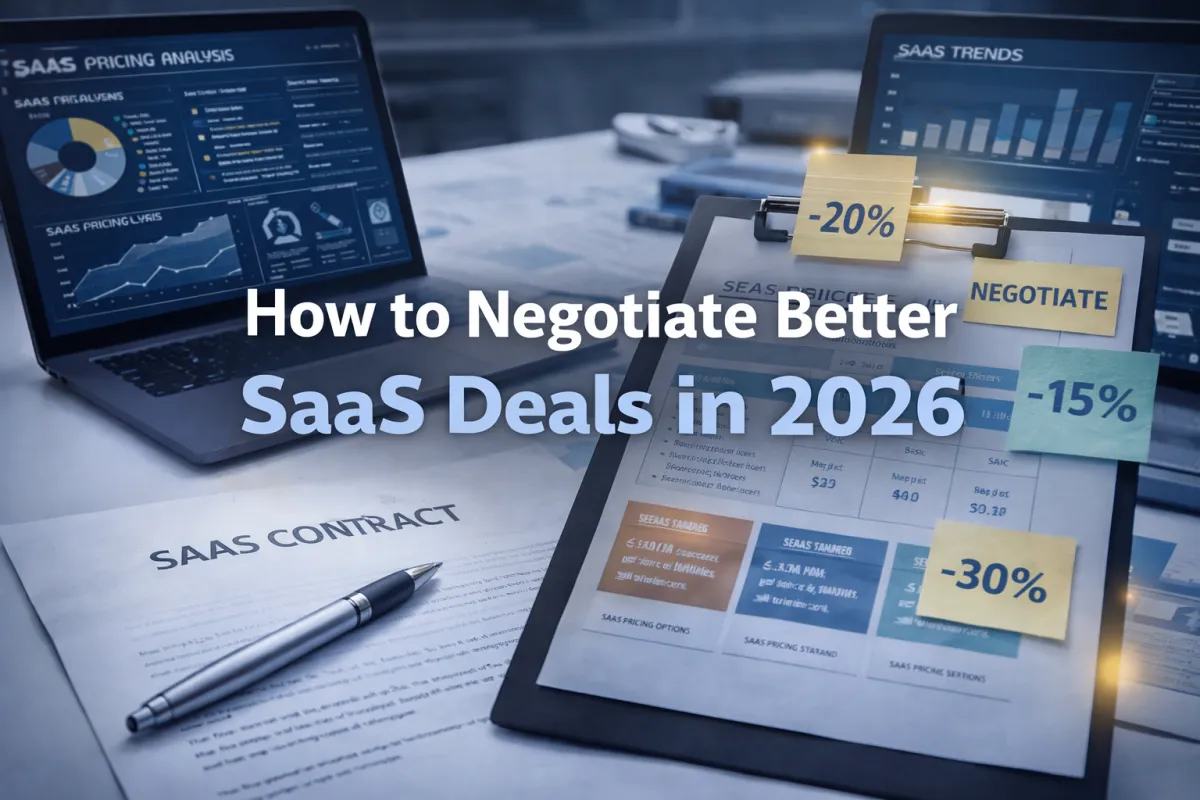
How to Negotiate Better SaaS Deals in 2026
As organizations continue to rely heavily on Software-as-a-Service (SaaS) platforms, SaaS spending has become one of the fastest-growing areas of IT budgets. From CRM systems to collaboration tools and AI platforms, businesses are investing more than ever in subscription-based technologies.
However, many companies unknowingly overpay for SaaS solutions due to weak negotiation strategies, lack of pricing transparency, and limited understanding of vendor tactics.
In 2026, negotiating SaaS deals is no longer just about price—it’s about securing flexibility, scalability, and long-term value.
1. Understand the Vendor’s Pricing Model
Before entering any negotiation, it’s critical to understand how SaaS vendors structure their pricing.
Most vendors use combinations of:
Per-user pricing
Tiered plans
Usage-based billing
Feature-based packaging
Vendors often design pricing to maximize revenue, not necessarily to match your usage.
Understanding how pricing works allows you to:
Identify unnecessary features
Avoid overpaying for unused capacity
Choose the most cost-efficient plan
2. Don’t Accept Initial Pricing
One of the biggest mistakes organizations make is accepting the first quote provided by a SaaS vendor.
Initial pricing is rarely the best offer.
SaaS vendors typically have flexibility to:
Offer discounts (10%–40% or more)
Adjust pricing tiers
Bundle additional features
Provide incentives for longer commitments
Always treat the first proposal as a starting point, not the final deal.
3. Time Your Negotiation Strategically
Timing plays a crucial role in SaaS negotiations.
The best time to negotiate is:
End of the vendor’s quarter or fiscal year
Before your current contract renewal
When the vendor is trying to hit sales targets
During these periods, vendors are more willing to:
Offer deeper discounts
Provide flexible terms
Accelerate approvals
4. Negotiate More Than Just Price
Price is important—but it’s not the only factor that impacts long-term value.
Organizations should also negotiate:
Flexible contract terms
Ability to scale users up or down
Price protection against future increases
Additional support or onboarding services
Strong contract terms can save more money over time than a simple upfront discount.
5. Avoid Long-Term Lock-In Without Protection
Many SaaS vendors push for multi-year contracts in exchange for lower pricing.
While this can provide cost savings, it also creates risk if your needs change.
Before committing to long-term agreements, ensure your contract includes:
Exit clauses
Flexibility to adjust licenses
Performance-based terms
Clear renewal conditions
This protects your organization from being locked into unfavorable agreements.
6. Leverage Competitive Pressure
SaaS vendors are highly competitive, and they do not want to lose deals to competitors.
Use this to your advantage by:
Evaluating multiple vendors
Requesting competitive quotes
Signaling alternative options during negotiations
Even if you prefer one vendor, showing that you have options can significantly improve your negotiating position.
7. Use Data to Strengthen Your Position
Data is one of the most powerful tools in negotiation.
Organizations that come prepared with:
Pricing benchmarks
Usage data
Cost comparisons
ROI analysis
are far more likely to secure better deals.
Data shifts the conversation from opinion to fact, giving you stronger leverage.
Final Thoughts
SaaS spending will continue to rise in 2026, making effective negotiation more important than ever.
Organizations that take a strategic, data-driven approach to SaaS negotiations can:
Reduce costs significantly
Improve contract flexibility
Maximize long-term value
Negotiation is no longer just a procurement function—it’s a critical driver of financial performance and operational efficiency.
Ready to optimize your SaaS contracts?
ITNegotiator helps organizations reduce IT costs, benchmark vendor pricing, and negotiate stronger contracts.